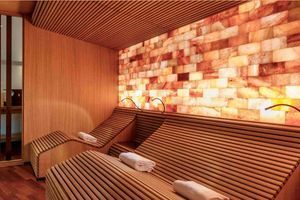
Himalayan Salt in the Sauna and Interior: What It Really Does for Your Body and Space
Himalayan salt is appearing more and more frequently - in saunas, wellness centres, hotel lobbies, and private living rooms. Some consider it a fashionable trend. Others see it as a proven tool for improving health and wellbeing. Where does the truth lie?
What Is Himalayan Salt and Why Is It Different from Shop Salt?
Himalayan salt comes from deposits in Pakistan that formed approximately 250 million years ago - when an ancient sea covered what is now the Himalayas. Over time, this sea was sealed beneath layers of rock, where the salt crystallised without exposure to modern industrial pollutants.
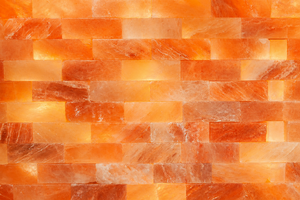
The result is a mineral composed of 95–98% sodium chloride and more than 80 trace elements - including magnesium, potassium, calcium, and iron. It is iron oxide that gives the salt its characteristic pink to orange-red colouration.
Himalayan Salt in the Sauna: What Happens When It Is Heated?
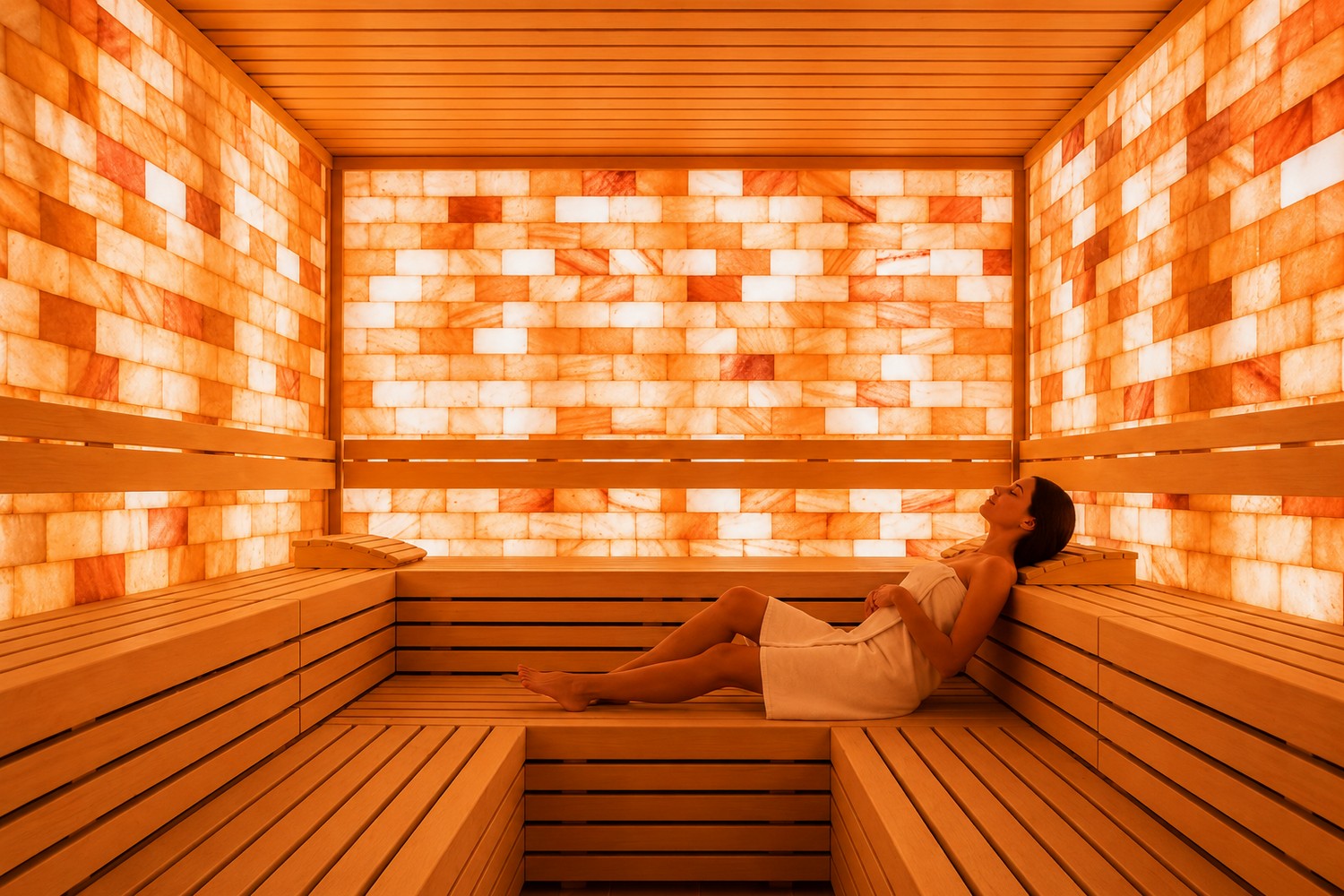
The sauna is a natural environment for Himalayan salt. High temperatures cause the salt surface to release negative ions - microscopic particles with a negative electrical charge that mix into the air of the cabin.
What Negative Ions Do
- They bind to dust particles, pollen, and allergens
- They support blood circulation and oxygenation of tissues
- They positively influence mood and reduce fatigue
Halotherapy - Salt as a Therapeutic Tool
Salt therapy has a long history in Europe. Polish and Slovak miners in salt mines were noticeably healthier than their colleagues in other industries - an observation that led to the development of halotherapy. Benefits confirmed by scientific studies include:
- Relief from asthma and chronic respiratory inflammation
- Alleviation of allergy symptoms
- Support for skin health - antiseptic effect
- Strengthening of immunity with regular use
A salt wall in a sauna is not a substitute for medical treatment. It is a complementary method with a demonstrable positive effect on wellbeing and prevention.
Himalayan Salt in the Interior: Does It Work Without a Sauna?
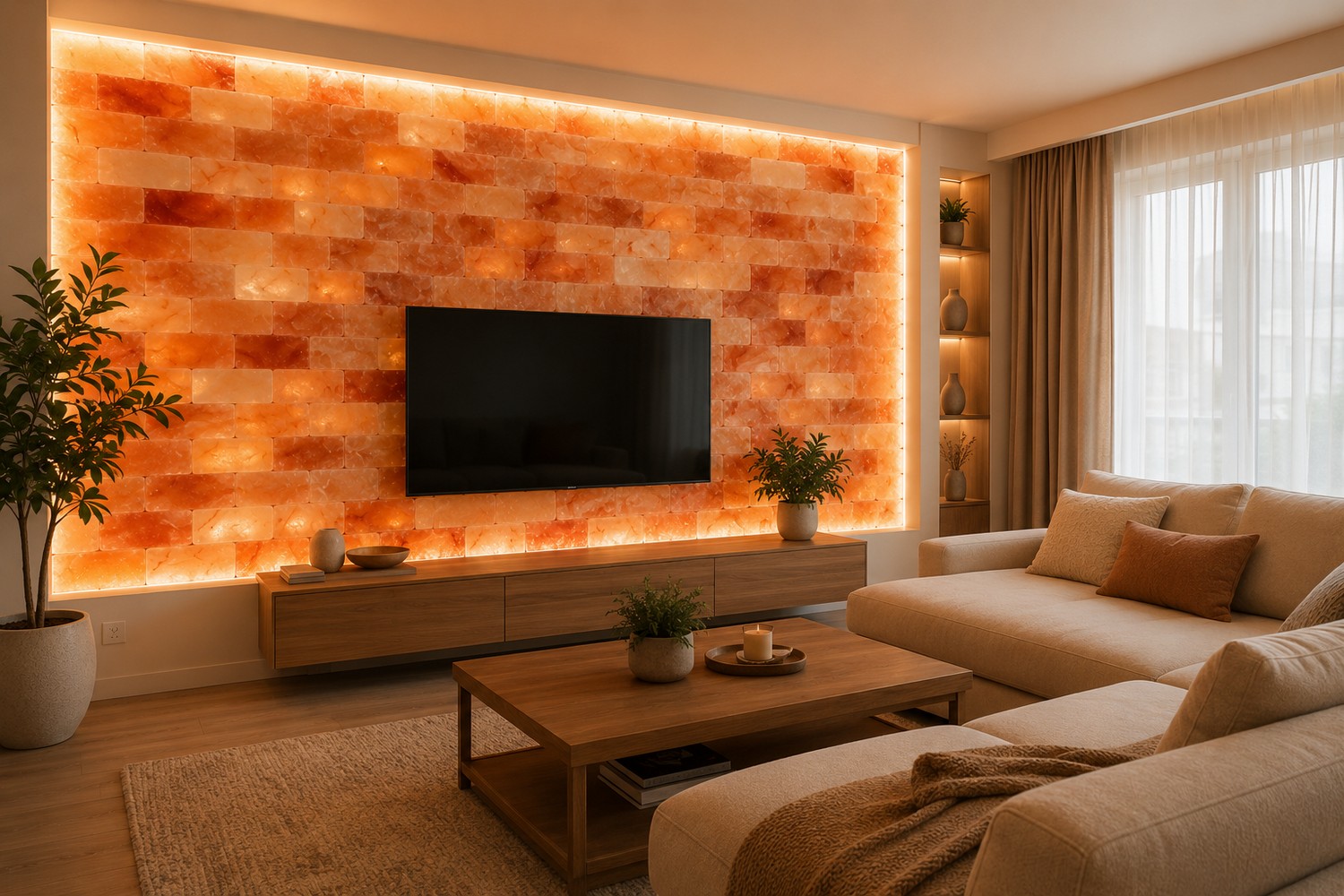
Yes - even in a dry interior, salt works, though less intensively than when heated. LED lighting gently warms the surface and enhances ionisation.
Natural Humidity Regulation
Salt is hygroscopic - it naturally absorbs moisture from the air. In an overly dry space it raises humidity; when humidity is higher, it absorbs it.
⚠️ For this reason, we do not recommend salt walls in spaces with permanently high humidity - bathrooms with direct water spray or steam baths.
Where Does a Salt Wall Work Best in an Interior?
|
Space |
Why It Works |
|
Sauna |
Maximum ionisation, halotherapeutic effect |
|
Bedroom |
Calm atmosphere, cleaner air for sleep |
|
Living room |
Design element + daily ionisation |
|
Office / study |
Reduced fatigue, better concentration |
|
Reception / lobby |
WOW effect, premium impression |
|
SPA & wellness |
Therapeutic environment, relaxation |
|
Children's room |
Safe ionisation, no chemicals |
Practical Tips for Maximum Effect
In the sauna:
Place the salt elements on the wall closest to the heat source. Combined with LED lighting, this creates a visually powerful experience.
In the interior:
Switch on the LED lighting regularly - consciously as an aid to ionisation. Even 2–3 hours a day has a long-term effect on air quality.
Maintenance:
Occasional wiping with a soft dry cloth is sufficient. Never use a wet cloth or cleaning products.
Summary
Himalayan salt is not just decoration. In the sauna it works intensively - the heated surface releases negative ions that purify the air, support breathing, and induce deep relaxation. In the interior it works subtly but steadily - ionising the air, naturally regulating humidity, and creating an atmosphere that demonstrably reduces stress.
Contact
📍 Showroom: U Elektry 830/2B, Praha 9 – Hloubětín, Czech Republic
📞 +420 775 84 80 81 ✉️ office@greus.com 🌐 greus.com